
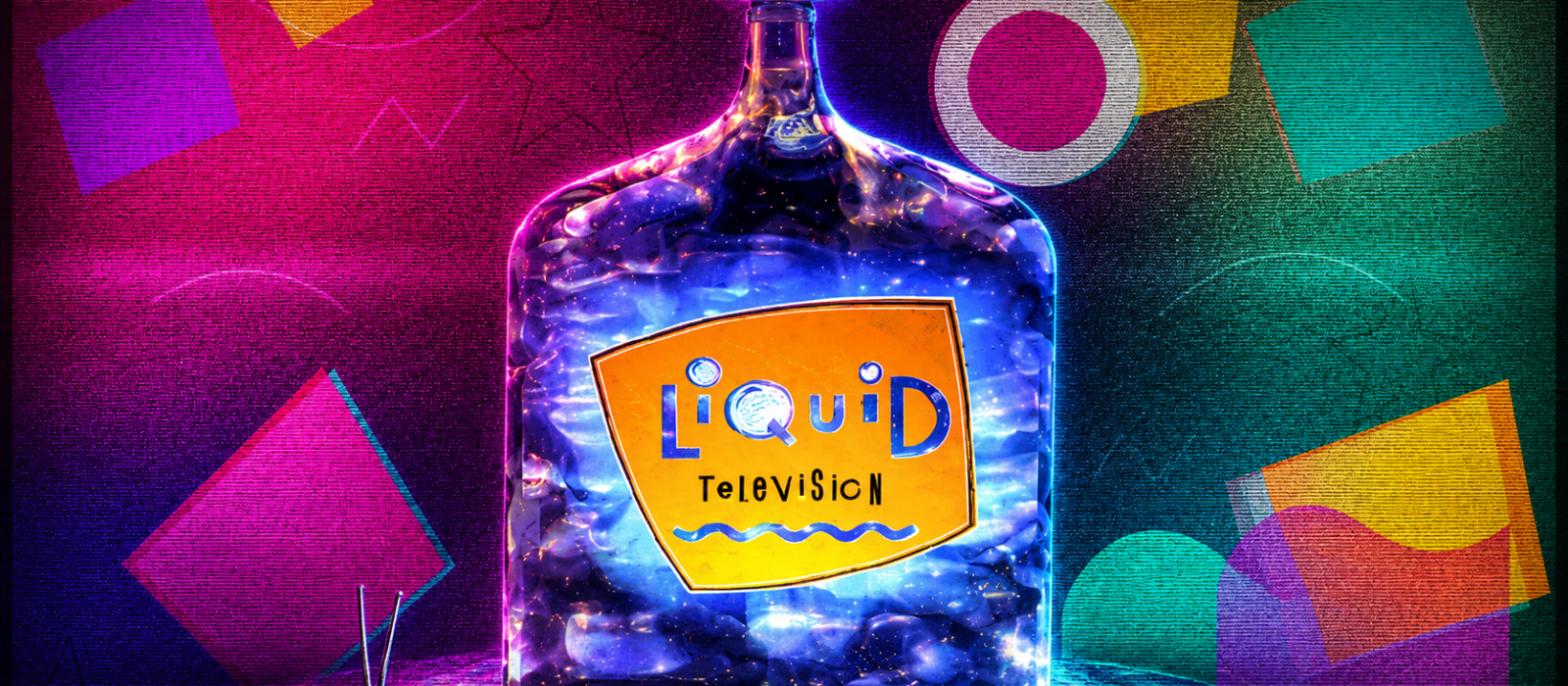
How Liquid Television Rewired MTV
MTV took real chances in the 1990s. Nothing proves that better than Liquid Television, the animation anthology that ran from June 2, 1991 to January 1, 1995. Three seasons, 22 episodes, created by British writer and producer Japhet Asher for Colossal Pictures and MTV Networks. The BBC co-produced the first season and aired it on BBC Two. The show also ran on MuchMusic in Canada, Channel V in Asia, SBS in Australia, and TV3 in New Zealand. This wasn’t a niche experiment MTV buried on a Sunday night. It went out worldwide.
Each half-hour episode crammed in somewhere between eight and fifteen unrelated animated shorts. Some ran a minute. Some ran five. Different animators, different styles, different stories, stacked back to back with zero connective tissue. Many episodes opened by taking a current music video and “liquifying” it into something unrecognizable before the actual segments even started. Asher told the Los Angeles Times exactly what he was going for: “We’re not interested in boring TV. It’s zap-free TV. If you’re not liking something you’re watching, wait two minutes and you’ll see something else.” He put it to Entertainment Weekly this way: “It’s part fun house, part laboratory experiment. It’s a mix of dozens of different animation styles.”
Before this show, an independent animator had two options. Work inside the Hollywood system, or make something nobody outside a festival circuit would ever see. Liquid Television pulled straight from Spike & Mike’s Sick and Twisted Festival of Animation, which had only started in 1990 at UC Berkeley, and from RAW, the underground comics anthology edited by Art Spiegelman and Françoise Mouly. Charles Burns had a strip running in RAW called Dog-Boy. MTV turned it into a recurring segment. Gary Panter, Mark Beyer, and Richard Sala, all RAW contributors, were suddenly airing on the same network as Nirvana videos. Sala’s segment, Invisible Hands, brought his scratchy, noir-inflected linework to the screen basically unchanged from the page. The show reached past American animators too: it aired Yoshiaki Kawajiri’s 1987 anime short The Running Man, years before Kawajiri went on to direct Vampire Hunter D: Bloodlust.
The budget explains a lot about how this got made. Animators got roughly $7,000 per short, split across an entire crew, with about four weeks to animate it and six weeks total once you count preproduction. Ed Bell, who animated the segment The Big City for the show, called getting that kind of shot “unheard of,” not because the money was good, but because nobody else was handing total creative control to unknown animators at all.
The Segments That Stood Out
Æon Flux, created by Peter Chung, is the one everybody remembers. It’s a dialogue-free action series about a leather-clad assassin operating in a dystopia with no clear good guys, telling its entire story through movement and visual staging instead of dialogue. That was not a safe bet in 1992. The segment debuted in November of that year and got spun off into its own full series in 1995, where the character finally got a voice, courtesy of Denise Poirier, and a recurring rival in the dictator Trevor Goodchild. It landed a live-action film in 2005 starring Charlize Theron.
The Specialists, from animator Joe Horne, played like a serialized spy thriller: recurring characters, an actual plot, a tone completely different from the show’s more abstract offerings. Horne later worked on Batman: The Animated Series, Sonic the Hedgehog, The Critic, Teen Titans, and The Boondocks. Dog-Boy, Charles Burns’ contribution, brought his specific brand of unsettling to a screen that had never shown anything like it: greasy linework, body horror sitting just under the surface.
Winter Steele doesn’t get talked about enough. It starred Cintra Wilson in the lead, a character-driven dramatic segment anchored by a woman at a time when that was rare in animation. Art School Girls of Doom did something similar from a different angle: it starred two transgender performers, Codie Field and Gina Varla Vetro, who voiced and inspired the characters, capturing ’90s drag and queer nightlife in the same cultural moment as Paris Is Burning and Wigstock. Liquid Television never announced any of this as a statement. It just let those voices sit there, next to everything else.
And then there’s Beavis and Butt-Head. Mike Judge submitted a short called Frog Baseball, in which two teenagers torment a frog with a baseball bat, along with another one called Peace, Love and Understanding. Frog Baseball had already played at the Sick and Twisted Festival before MTV picked it up. MTV’s response was immediate. A full series got greenlit, premiering in March 1993. Judge had a second short on Liquid Television too, a season two piece about a disgruntled office worker named Milton who gets pushed to the point of threatening to burn the building down. Judge later expanded that into the 1999 movie Office Space, and Milton’s storyline is exactly what closes out the film. Beavis and Butt-Head spun off Daria, got a feature film in 1996, and got another one in 2022. Judge went on to create King of the Hill. All of it traces back to two idiots watching TV in a cartoon nobody was supposed to notice.
People bring up an Emmy win when they talk about this show. The real story: Liquid Television was nominated in 1993 for Outstanding Animated Program, Programming One Hour or Less. It lost to Batman: The Series. Being one of four nominees in that category, against shows with real network animation budgets, is still a real acknowledgment for something made on $7,000 a segment.
Why It’s Hard to Find Today
You cannot just stream this show. Because so many episodes are built around licensed music, including full music videos getting run through the “liquify” treatment at the top of the episode, MTV has never rebroadcast complete episodes since the original run ended. What exists on home video is a fraction of what aired. Two VHS tapes came out in the late 1990s under the title The Best of Liquid Television, and a 90-minute DVD compilation called Wet Shorts followed in 1997. Both pulled selected segments, including the Æon Flux debut, rather than full episodes. If you want to see everything, you’re piecing it together from old tape rips and archive uploads, not a box set.
The Short-Lived Comeback
MTV tried to bring the brand back in 2011 under its MTVX division, with executive David Gale saying the show needed to “step outside its original tv-only model and instead live on every screen possible.” The relaunch spread across a dedicated site, MTV’s cable channels, and social media, mixing archival material with new commissions. The first new piece was an animated music video for the band Wallpaper., directed by Christy Karacas of Superjail! fame. It premiered, of all places, during an episode of Jersey Shore. New full episodes followed in 2013, but the revival didn’t stick around long, and most of that material is just as hard to track down now as the original run.
Why It Still Matters
Liquid Television proved something most networks still won’t test: that an audience will follow something strange if you trust them with it. It gave working exposure to independent animators years before the internet made that normal. Its run predates Adult Swim, which copied the same late-night anthology-of-weirdness format when it launched in 2001. And measured from its 1991 premiere, it beat YouTube’s version of open animation exposure by fourteen years.
The alumni list is the real proof. Ed Bell went from The Big City straight into working on The Simpsons and The Ren & Stimpy Show. Joe Horne went to Batman: The Animated Series, Teen Titans, and The Boondocks. Mike Judge built King of the Hill on the back of it. Peter Chung built an entire career on Æon Flux alone. Yoshiaki Kawajiri kept directing anime for another two decades after his short aired here. One anthology show, 22 episodes, more than 80 individual segments across its run, and it seeded a generation of the animators who built the shows that came after it.
Asher said the thing he’s proudest of isn’t Æon Flux or the ratings. It’s the people who saw Liquid Television and decided, because of it, to go make their own weird thing.
That’s the actual legacy. Not the Emmy nomination. Not even Beavis and Butt-Head. Permission, for animators nobody had heard of yet, to put something strange on television and let it find an audience anyway.